The AI Governance and Regulatory Archive
We study how AI governance develops, what it prioritizes, and how policy choices differ across institutions and jurisdictions.
The archive
AI law and policy, open for research
AGORA brings together AI laws, regulations, and industry governance documents, including corporate policies and voluntary commitments. Full text, summaries, and thematic coding make it possible to examine individual policies and compare approaches across them.
Explore AGORA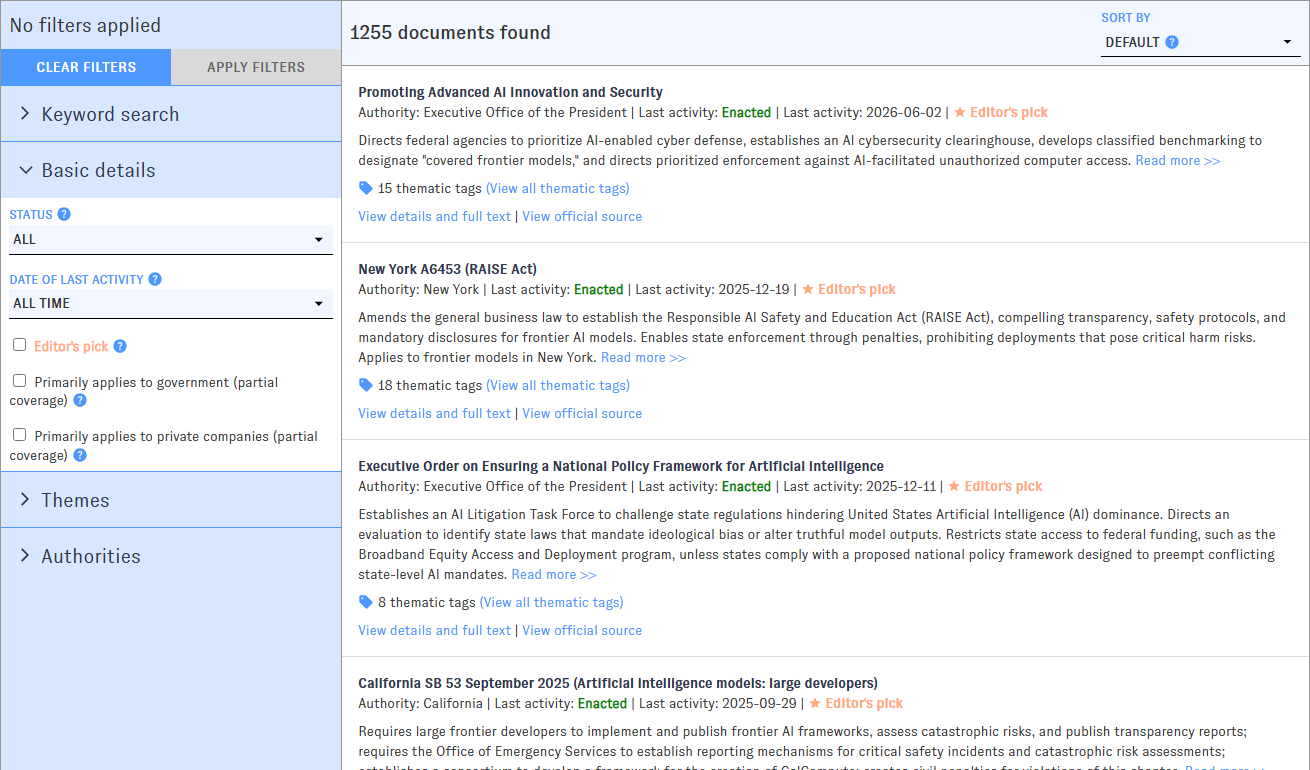
Risks, harms, and policy responses
AI policies may require audits, mandate disclosures, or fund research. They also differ in the risks, harms, and uses of AI they address.
Archive documentation| Category | Examples |
|---|---|
| Risk factors | Bias, privacy, security, and reliability |
| Harms | Discrimination, financial loss, and environmental harm |
| Governance strategies | Audits, disclosure, performance requirements, and public investment |
| Applications | Education, employment, health care, and public safety |
Our research
The choices shaping AI governance
AI policies differ in the problems they address, the tools they use, and the people they aim to protect. We examine those choices and how they develop over time.
Governance priorities and public valuesWhich risks, harms, and public interests receive attention?
We examine how AI policies address rights, accountability, safety, and other public values, and how these priorities relate to the governance strategies policymakers choose.
Our work on public values in federal AI policy considers both prominent commitments and less explicit attention to citizen engagement, responsiveness, and workplace standards.
Policy adoption and diffusionHow do policy ideas and legislative language spread?
We are investigating how AI policies develop across U.S. states, including the timing of policy adoption and the reuse of legislative language. This work considers how political institutions and networks may shape the spread and adaptation of policy ideas.
AGORA’s policy text and thematic coding complement legislative records used to trace these changes.
Computational policy analysisHow can we study a growing body of AI policy reliably?
We develop methods for finding policy documents, identifying substantive attention to AI, and organizing policy text for analysis. Automated screening and classification work alongside human annotation and validation.
We also study how language models retrieve and interpret policy documents and how to check the evidence behind their answers.
Working together
Building a shared research resource
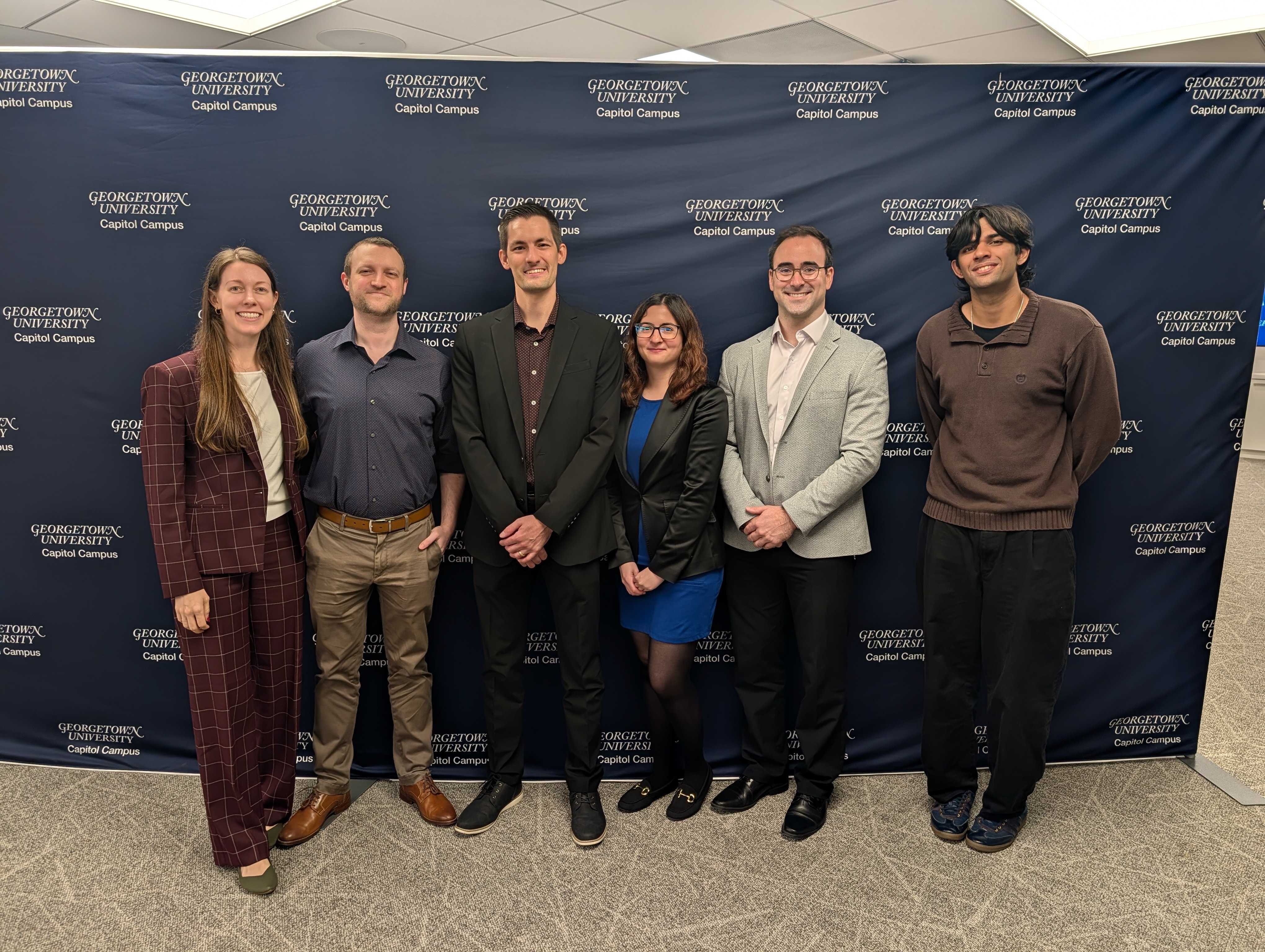
GRAIL and Georgetown CSET’s Emerging Technology Observatory created and maintain AGORA. The MIT AI Risk Initiative and Carnegie Mellon’s EncyclopAIdia team collaborate on document sourcing, processing, and analysis.
Students contribute to policy research and the archive’s development.
Student writing and policy analysis
AI Policy Corner
GRAIL students analyze AI laws, national strategies, and industry governance in AI Policy Corner, our series with the Montreal AI Ethics Institute.
Faculty and graduate researchers mentor student authors.
Read more AI Policy Corner articlesCurrent contributors
- Ahmet Ergurum
- Alexander Wilhelm
- Arushi Shah
- Bharath Gururagavendran
- Chandan Ghosh
- Daniel S. Schiff
- Delainie Nichols
- Gitali Teckchandani
- Jaeyun Kim
- Kaylyn Jackson Schiff
- Krish Rawat
- Meng Shi
- Ogadinma Enwereazu
- Priyanka Prasad Paradkar
- Rohith Balijepalli
- Ruth Sugiarto